

Rwanda, Buki
| Producer | Jean Paul |
| Farm/Mill | Liza Mill |
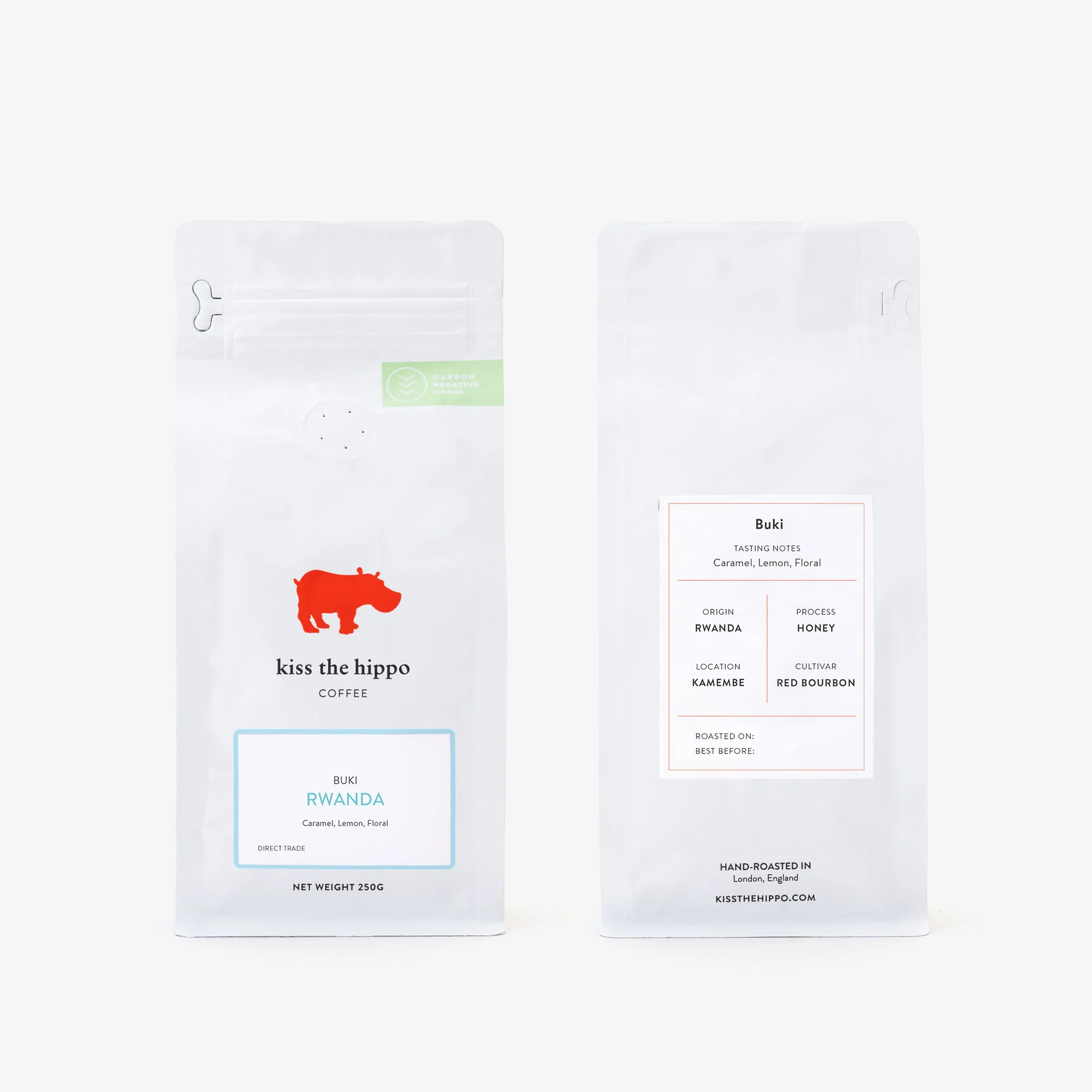
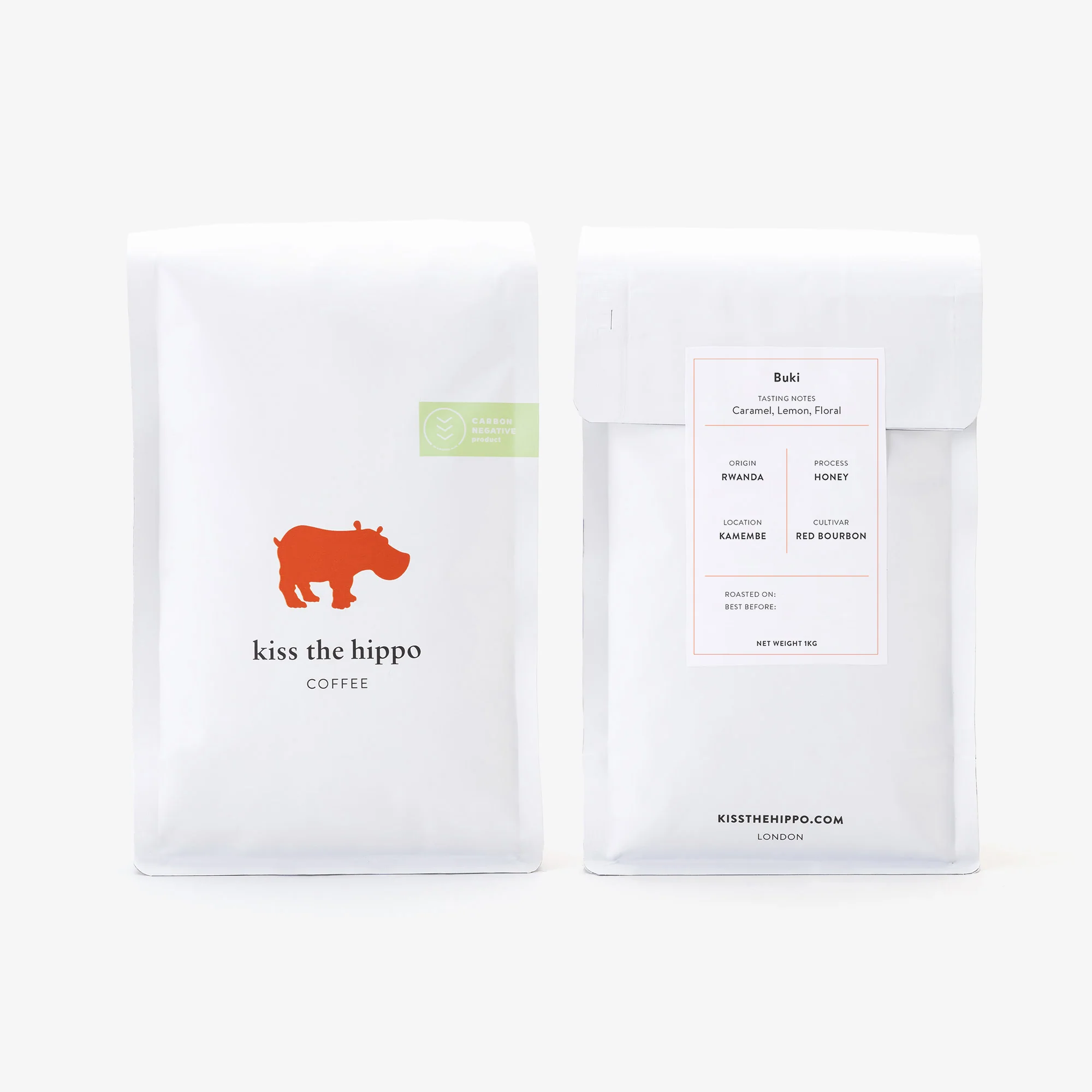
| Cultivar | Red Bourbon |
| Process | Honey |
| Location | Kamembe |
| Altitude | 1,600 - 1,800 masl |
| Harvest | April - July |
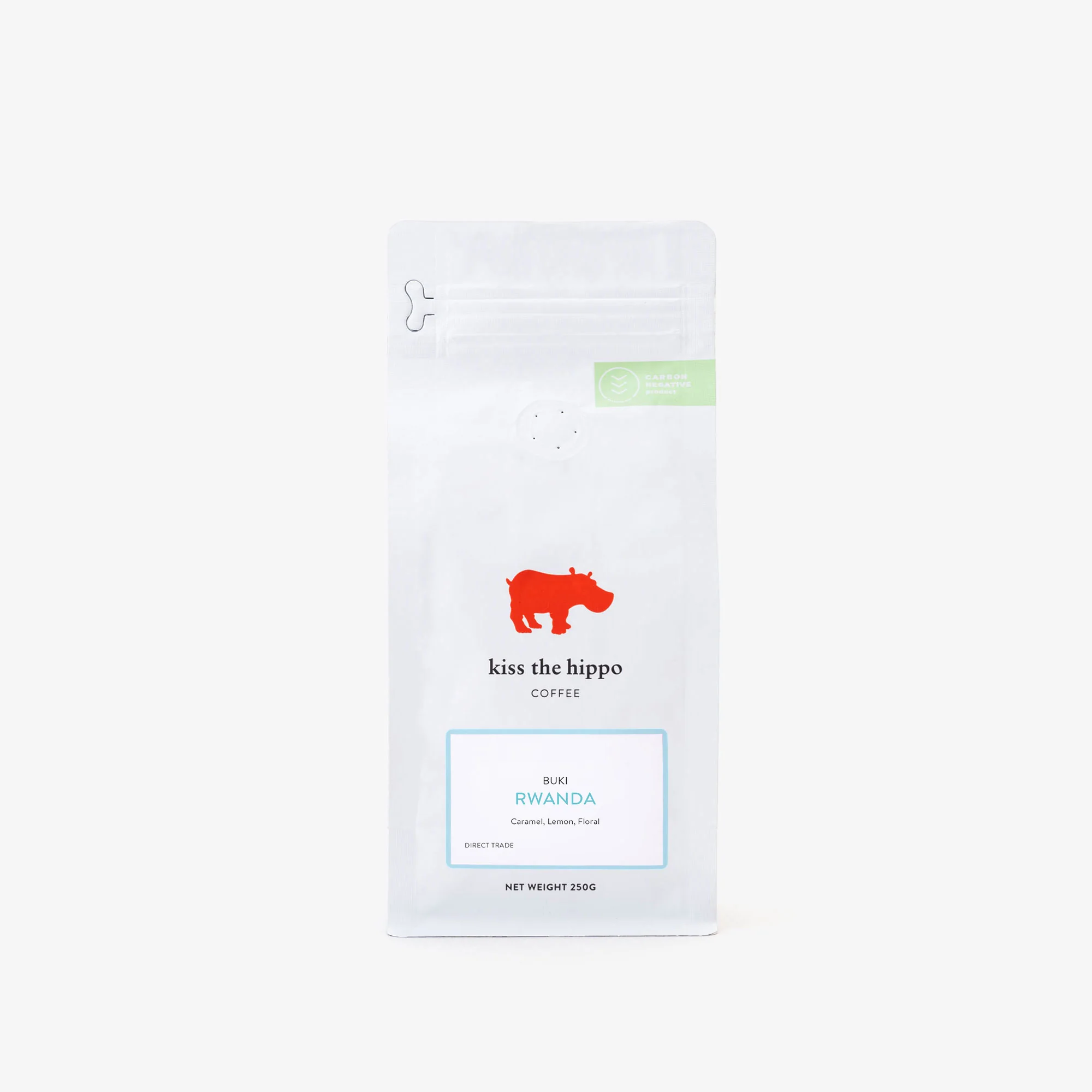
Expect notes of Caramel, Lemon, Floral.

Buki is the second release from our Liza mill processing set, this lot being a honey processed coffee.
Honey is a coffee processing method that combines elements of both the dry and wet methods: it involves removing the skin and pulp from the coffee cherries, leaving some of the sticky-sweet mucilage intact, before allowing the beans to dry. During the drying process, the beans are turned frequently to ensure even drying and to prevent uneven fermentation. The beans are dried with the mucilage still on, which gives them a sticky texture and honey-like sweetness, hence the name "honey".
Honey processed coffee is considered a middle ground between washed and natural processed coffees. It allows for the development of unique flavour profiles, while retaining some of the acidity and brightness associated with washed coffees.
Jean Paul manages a farm with approximately 6,000 trees, and he not only processes the coffee from his own land but also from several hundred small-scale local farmers in the surrounding community. The exceptional quality of his coffee is a testament to his unwavering commitment and determination to train and educate these farmers, as well as to his meticulous attention to detail during the hand-sorting process at the washing station.
Original: $28.43
-65%$28.43
$9.95Product Information
Product Information
Shipping & Returns
Shipping & Returns
Description
| Producer | Jean Paul |
| Farm/Mill | Liza Mill |
| Cultivar | Red Bourbon |
| Process | Honey |
| Location | Kamembe |
| Altitude | 1,600 - 1,800 masl |
| Harvest | April - July |
Expect notes of Caramel, Lemon, Floral.
Buki is the second release from our Liza mill processing set, this lot being a honey processed coffee.
Honey is a coffee processing method that combines elements of both the dry and wet methods: it involves removing the skin and pulp from the coffee cherries, leaving some of the sticky-sweet mucilage intact, before allowing the beans to dry. During the drying process, the beans are turned frequently to ensure even drying and to prevent uneven fermentation. The beans are dried with the mucilage still on, which gives them a sticky texture and honey-like sweetness, hence the name "honey".
Honey processed coffee is considered a middle ground between washed and natural processed coffees. It allows for the development of unique flavour profiles, while retaining some of the acidity and brightness associated with washed coffees.
Jean Paul manages a farm with approximately 6,000 trees, and he not only processes the coffee from his own land but also from several hundred small-scale local farmers in the surrounding community. The exceptional quality of his coffee is a testament to his unwavering commitment and determination to train and educate these farmers, as well as to his meticulous attention to detail during the hand-sorting process at the washing station.