
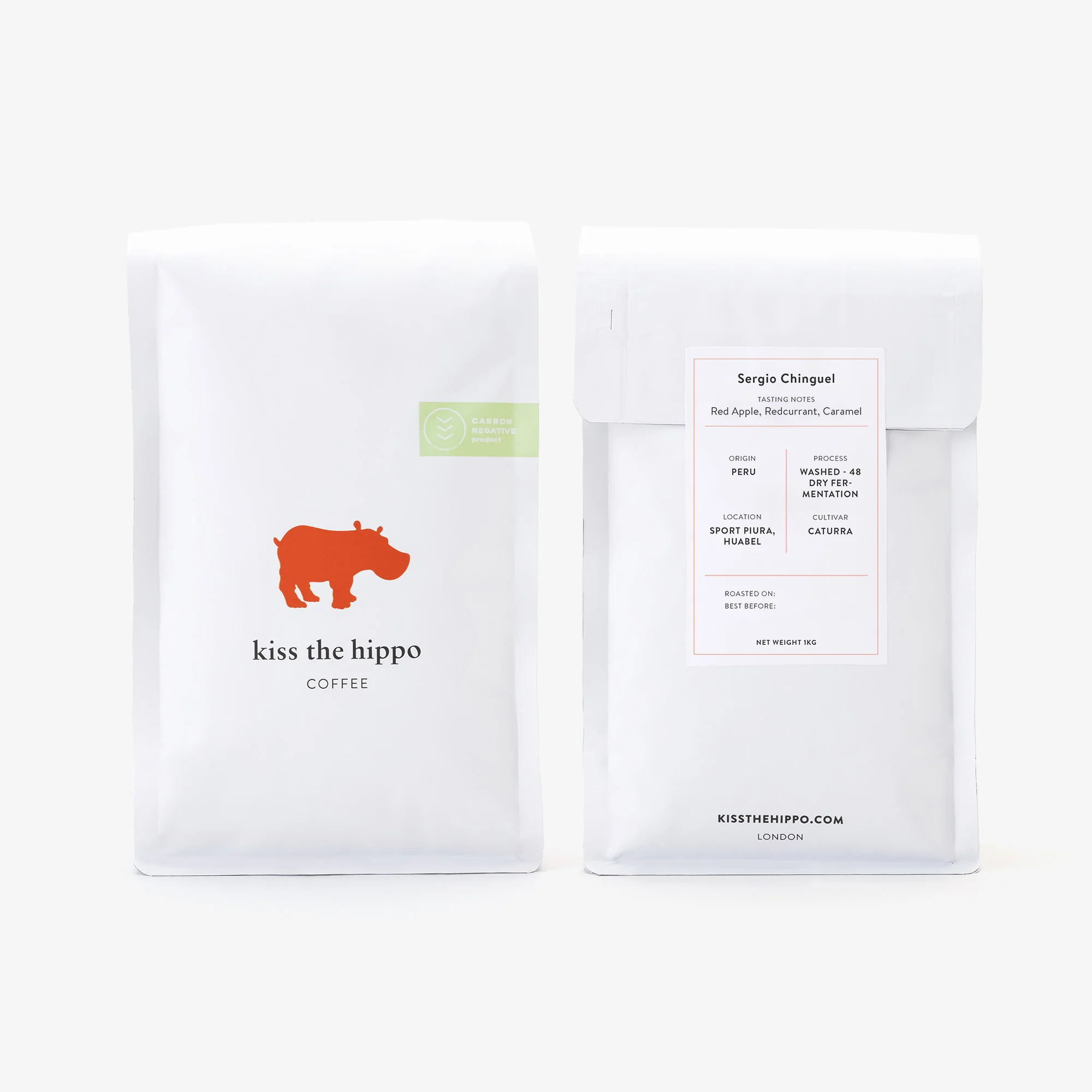
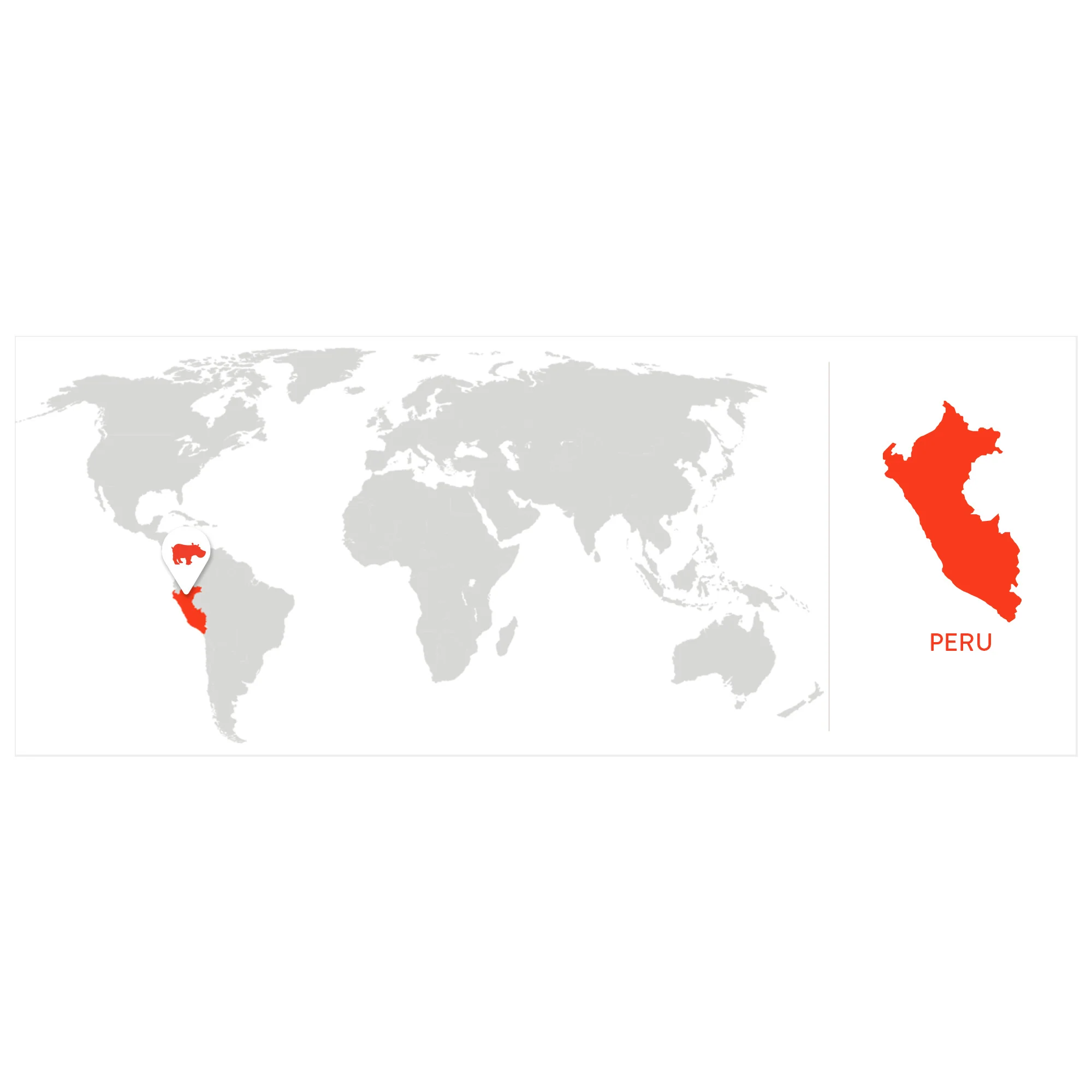

Peru, Sergio Chinguel
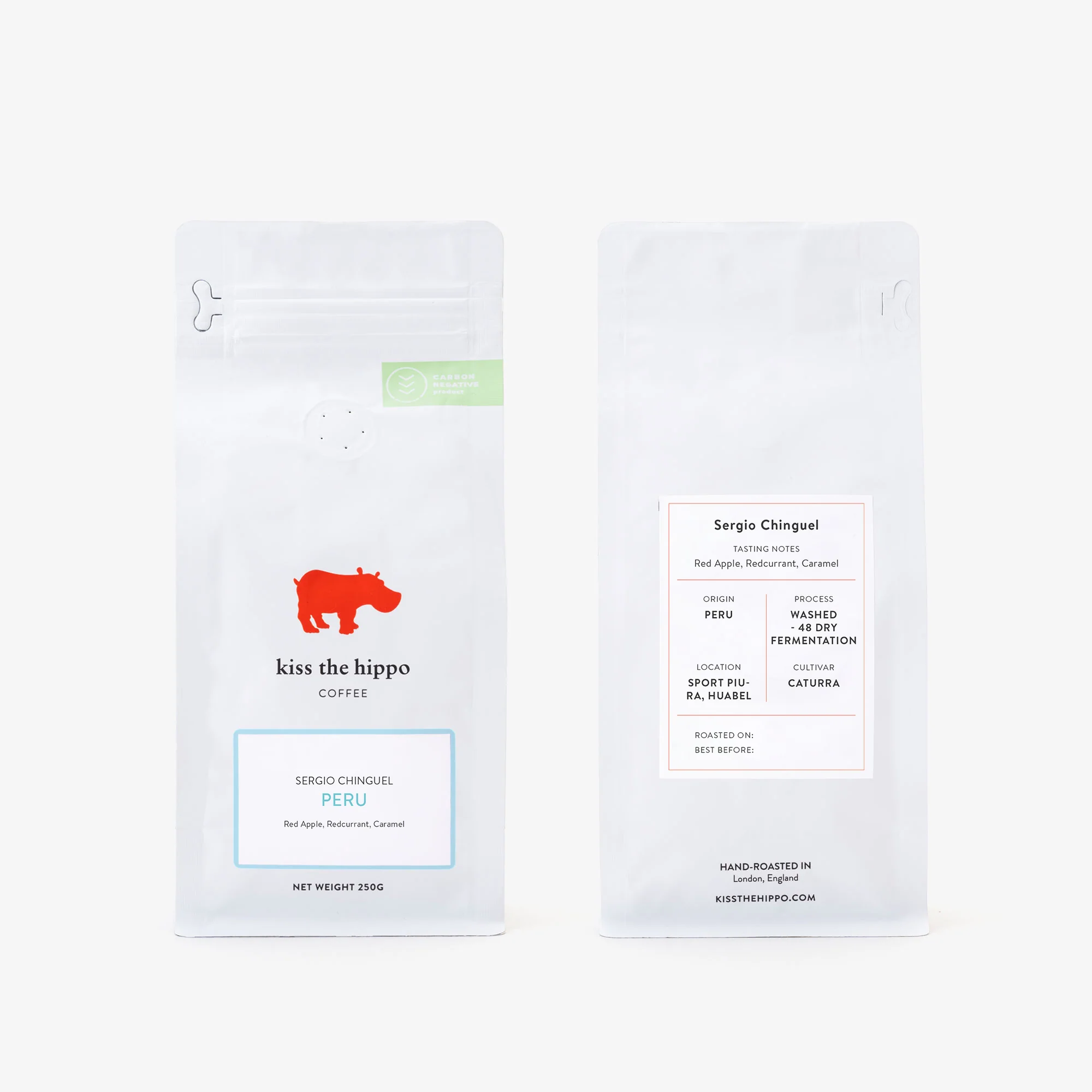
| Producer | Sergio Chinguel Alberca |
| Farm/Mill | Sergio Chinguel Alberca |
| Cultivar | Caturra |
| Process | Washed - 48 Dry Fermentation |
| Location | Sport Piura, Huabel |
| Altitude | 1,850 - 1,900 masl |
| Harvest | November - January |
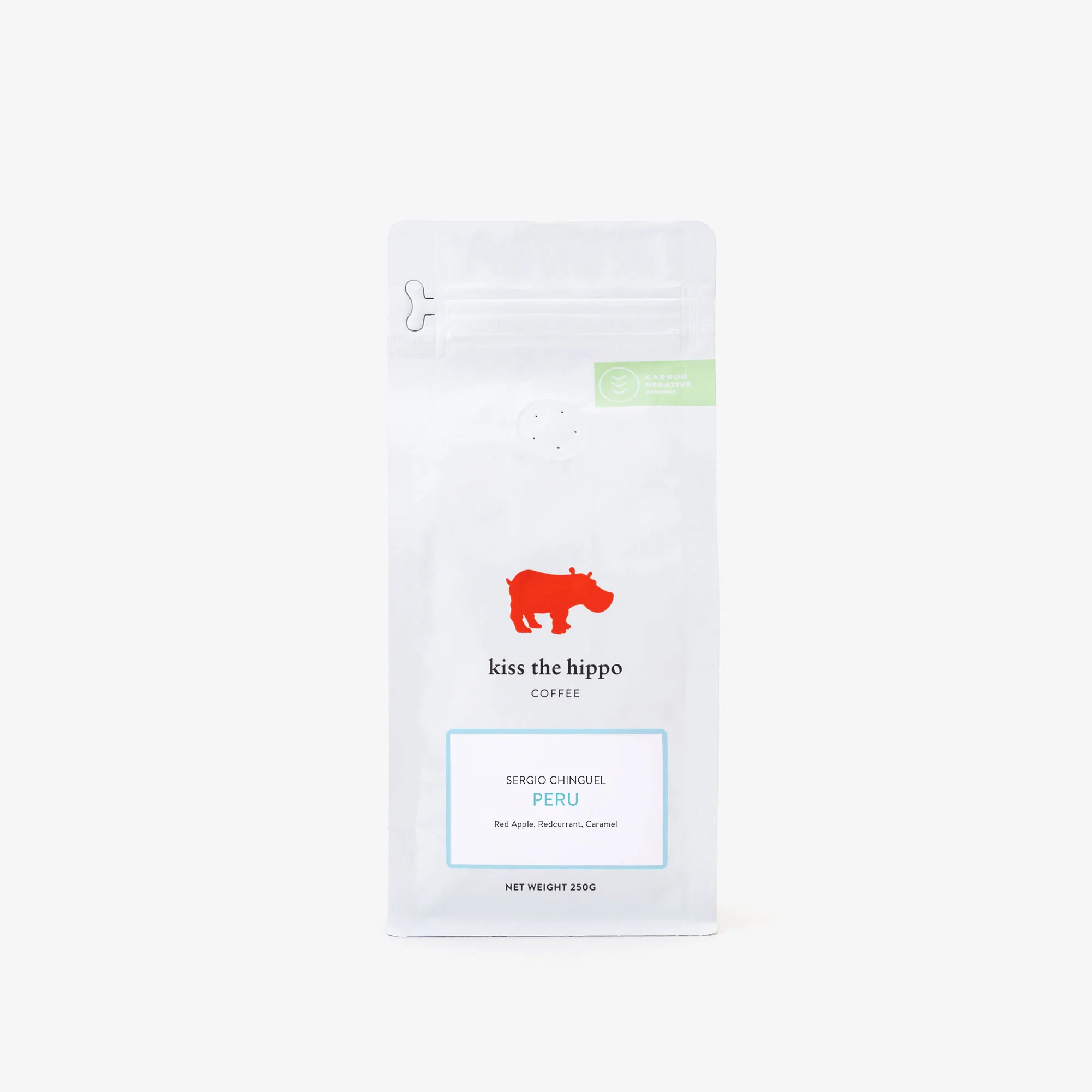
Expect notes of Red Apple, Redcurrant, Caramel.

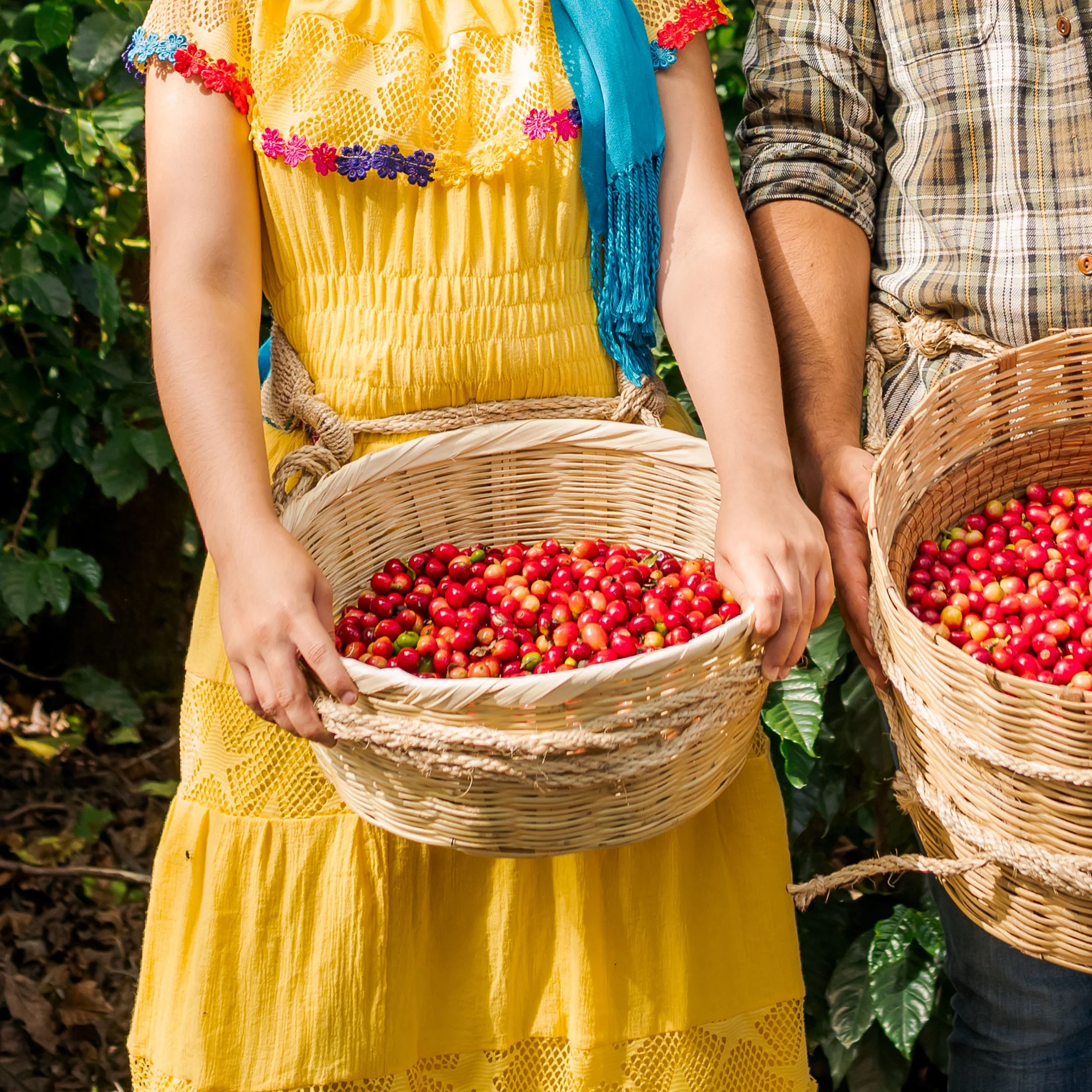
Sergio and his family pick their coffee together. Since their farm is fairly small, they can manage most of the harvest themselves, calling in the odd favour from neighbours at the peak of the harvest. These favours are always returned, forming the basis of a work exchange system which dates back to Incan times and is called Ayni.
Once picked, coffee is washed and floated before being pulped and fermented in GrainPro bags. Sergio likes to ferment coffee in GrainPro bags because, according to him, they keep the coffee wrapped up in the honey or fermentation juices, imbuing it with extra flavour. Coffee is usually fermented after 48 hours, but this depends on the weather, so the finishing time is always determined by the smell and how it feels to the touch.
Once fermentation is complete, the coffee is placed to dry on covered raised beds which protect it from the elements and allow for a slow, even drying. The drying time ranges from 15 to 20 days, sometimes up to 30 days if the climate is particularly cloudy.
Sergio Chinguel Alberca is a second generation coffee farmer from the village of Sport Piura in Huabal, Jaen, Cajamarca. Sergio grows caturra and yellow bourbon varieties on his family farm over an area of around three hectares. Although not certified, Sergio uses organic fertiliser on his farm and doesn’t use any agrochemicals, this is in part due to the cost of chemical fertilisers but also because of a personal preference for all things natural.
Sergio has planted a lot of shade trees, despite the high altitude, which are leguminous species that create a natural source of nitrogen in the soil. The shade provides a number of benefits to his farm, reducing weed growth rate, reducing the need for fertilisers and providing more stable conditions for the coffee plants themselves. Sergio has combined both modern and traditional farming practises, giving the farm a very presentable appearance with neat rows and well-spaced plants, while incorporating many sustainable agricultural practises that have been used for generations.
Original: $28.43
-65%$28.43
$9.95Product Information
Product Information
Shipping & Returns
Shipping & Returns
Description
| Producer | Sergio Chinguel Alberca |
| Farm/Mill | Sergio Chinguel Alberca |
| Cultivar | Caturra |
| Process | Washed - 48 Dry Fermentation |
| Location | Sport Piura, Huabel |
| Altitude | 1,850 - 1,900 masl |
| Harvest | November - January |
Expect notes of Red Apple, Redcurrant, Caramel.
Sergio and his family pick their coffee together. Since their farm is fairly small, they can manage most of the harvest themselves, calling in the odd favour from neighbours at the peak of the harvest. These favours are always returned, forming the basis of a work exchange system which dates back to Incan times and is called Ayni.
Once picked, coffee is washed and floated before being pulped and fermented in GrainPro bags. Sergio likes to ferment coffee in GrainPro bags because, according to him, they keep the coffee wrapped up in the honey or fermentation juices, imbuing it with extra flavour. Coffee is usually fermented after 48 hours, but this depends on the weather, so the finishing time is always determined by the smell and how it feels to the touch.
Once fermentation is complete, the coffee is placed to dry on covered raised beds which protect it from the elements and allow for a slow, even drying. The drying time ranges from 15 to 20 days, sometimes up to 30 days if the climate is particularly cloudy.
Sergio Chinguel Alberca is a second generation coffee farmer from the village of Sport Piura in Huabal, Jaen, Cajamarca. Sergio grows caturra and yellow bourbon varieties on his family farm over an area of around three hectares. Although not certified, Sergio uses organic fertiliser on his farm and doesn’t use any agrochemicals, this is in part due to the cost of chemical fertilisers but also because of a personal preference for all things natural.
Sergio has planted a lot of shade trees, despite the high altitude, which are leguminous species that create a natural source of nitrogen in the soil. The shade provides a number of benefits to his farm, reducing weed growth rate, reducing the need for fertilisers and providing more stable conditions for the coffee plants themselves. Sergio has combined both modern and traditional farming practises, giving the farm a very presentable appearance with neat rows and well-spaced plants, while incorporating many sustainable agricultural practises that have been used for generations.